Five Faculty Moves Reshaping Procedural Medicine in 2026
A chair appointment can look like faculty news. In procedural medicine, it is often a strategy announcement.
Five moves announced for 2026 show major academic centers recruiting not just administrators, but distinct combinations of clinical expertise, research infrastructure, and training influence.
The Appointment Is Only the Headline
Department leaders influence faculty recruitment, program design, trainee mentorship, technology adoption, and the cases an institution is positioned to pursue. The most revealing detail is therefore not the title. It is the capability each institution chose to import.
Five Moves to Watch
Timothy R. Donahue, MD to Weill Cornell Medicine
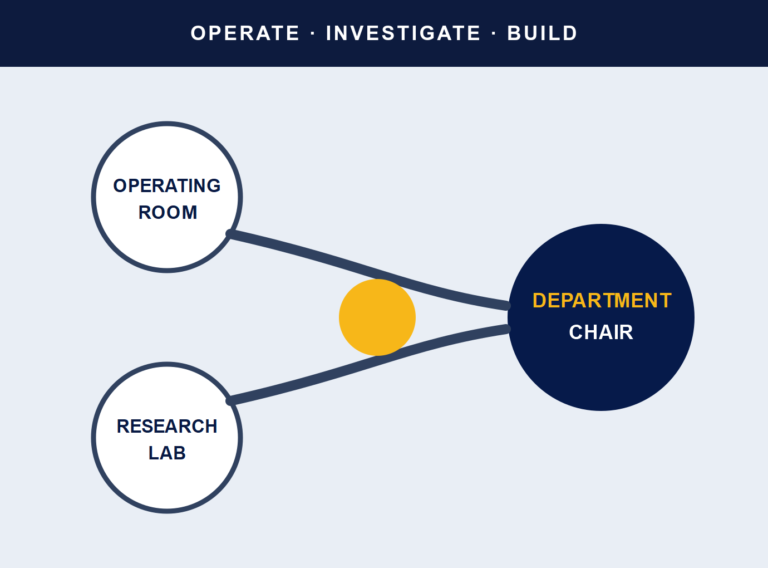
Donahue arrives from UCLA, where he led surgical oncology and cancer services while running an NIH-funded pancreatic cancer laboratory. He also served as a general surgery residency program director.
Why it matters: Weill Cornell is pairing department leadership with a surgeon-scientist whose platform connects complex pancreatic surgery, translational oncology, and surgical training.
Official announcement · Explore surgery programs in ClearSight
Guy M. McKhann II, MD to Emory
McKhann brings expertise spanning awake brain mapping, minimally invasive microneurosurgery, epilepsy surgery, laser ablation, neuroendoscopy, and Gamma Knife radiosurgery.
Why it matters: The move transfers a broad technology-enabled neurosurgical portfolio—not a single subspecialty—and could shape both complex case growth and resident exposure.
Official announcement · Explore neurosurgery programs in ClearSight
Umar Mahmood, MD, PhD to Stanford
Mahmood built his career around molecular imaging and precision medicine, including PET, optical, and MR approaches. Stanford reports more than $25 million in principal-investigator funding, over 190 peer-reviewed papers, and mentorship of more than 100 trainees.
Why it matters: Stanford is placing molecular imaging, theranostics, and translational cancer research at the center of its next radiology chapter.
Official announcement · Explore radiology programs in ClearSight
Bradley J. Segura, MD, PhD to Duke
Segura previously held roles spanning pediatric trauma, ECMO, intestinal failure, surgical quality, and mentorship at the University of Minnesota and M Health Fairview Masonic Children’s Hospital.
Why it matters: Duke is importing experience across the operating room and the surrounding care system—exactly the breadth required to build complex pediatric surgical programs.
Official announcement · Explore pediatric surgery programs in ClearSight
Shaun C. Desai, MD to Westchester Medical Center
Desai’s published clinical profile centers on facial plastic and reconstructive surgery, including microvascular reconstruction and complex head and neck care.
Why it matters: The appointment gives the system a leader whose procedural focus can connect oncologic care, reconstruction, and specialized training across the head and neck service line.
Official announcement · Explore otolaryngology programs in ClearSight
The Common Thread
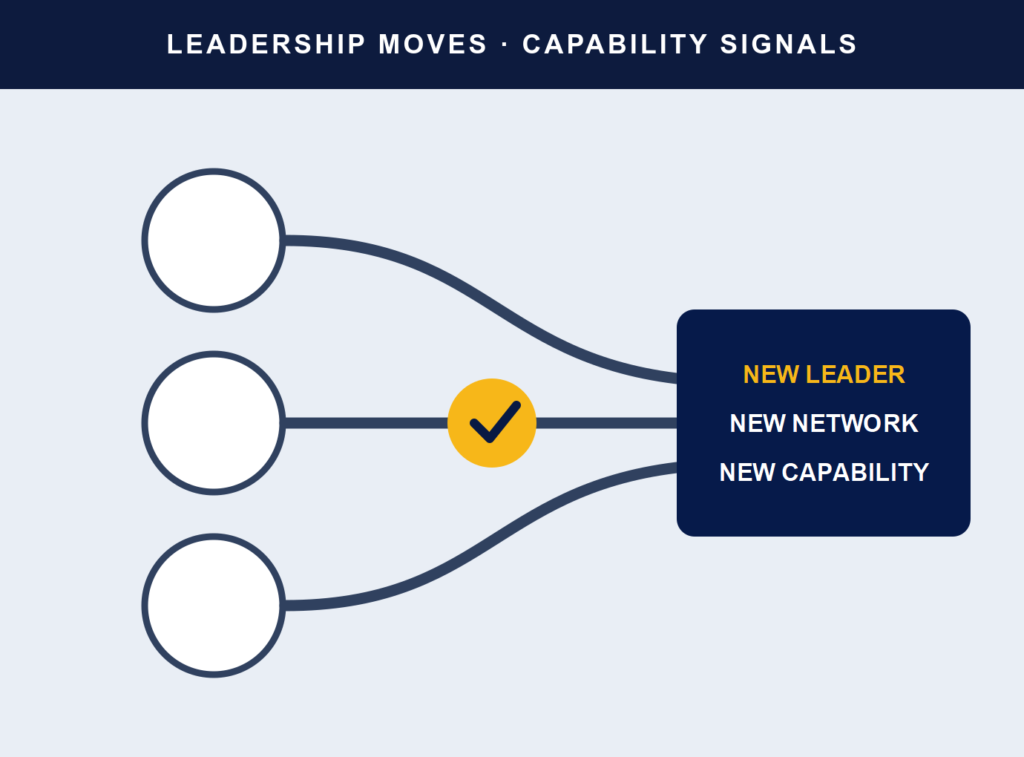
These appointments cross different specialties, but the hiring logic looks similar. Each destination selected a leader with a recognizable clinical and academic platform: a procedural niche, a research network, a record of mentorship, or experience building complex systems of care.
That makes faculty movement valuable competitive intelligence. A new chair can foreshadow where an institution may recruit next, which programs may expand, and which procedural technologies will find a stronger internal champion.
What to Watch Next
The announcement is the starting point. The stronger signal comes from what follows: new faculty recruits, changing procedure mix, expanded fellowships, clinical trials, and capital investment.
ClearSight connects those signals through physician, facility, and training-program profiles—turning a leadership headline into a view of how institutional capabilities are changing.
- Weill Cornell Medicine. Dr. Timothy R. Donahue named Chair of Surgery and Surgeon-in-Chief, July 2026.
- Emory University. Guy M. McKhann II named Chair of Neurosurgery, June 2026.
- Stanford Medicine. Umar Mahmood appointed Chair of Radiology.
- Duke Department of Surgery. Bradley J. Segura named Chief of Pediatric General Surgery, January 2026.
- New York Medical College. Shaun Desai named Chair of Otolaryngology–Head and Neck Surgery, March 2026.
- Provider and facility identifiers were checked against public NPI records and ClearSight Health data.
Methodology: This is a selected roundup, not a comprehensive ranking of 2026 faculty appointments. Appointment facts, dates, prior roles, and published areas of expertise come from the cited institutional announcements. The strategic implications are ClearSight Health analysis. ClearSight links provide additional physician, facility, and training-program context.