The Rise of the Surgeon-Scientist Chair
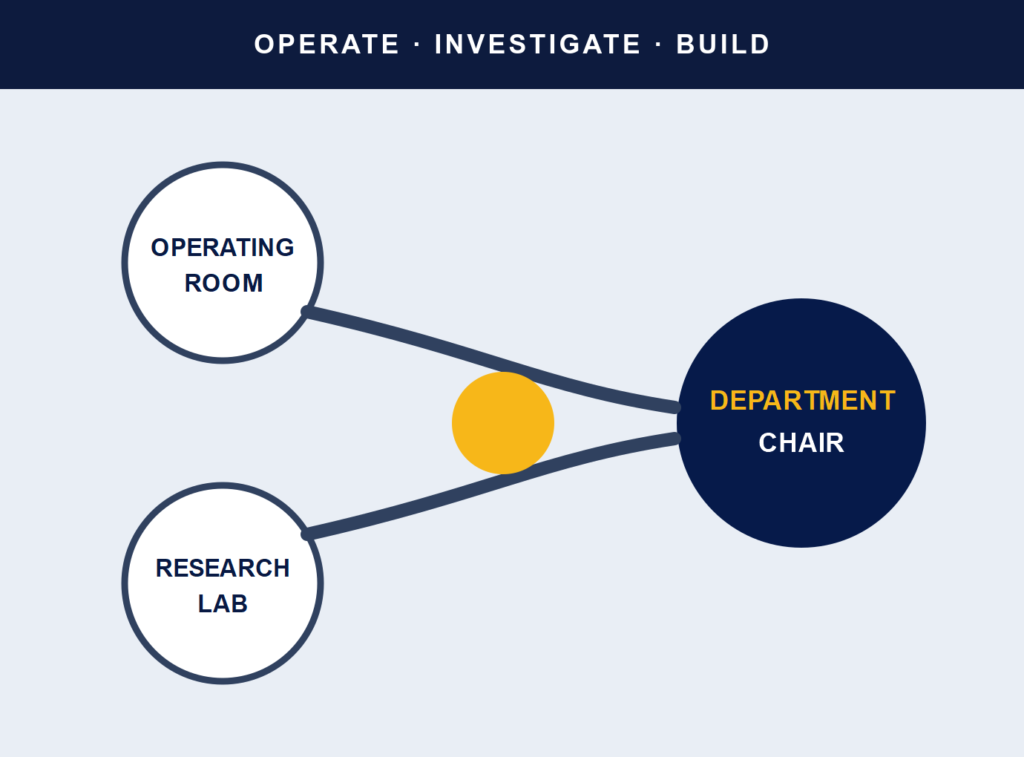
A Rare Profile Is Moving Into the Chair’s Office
Surgeon-scientists occupy an unusually difficult position. They must maintain clinical expertise while competing for research funding, protecting laboratory time and meeting the productivity demands of academic surgery.
The numbers show how rare that combination has become. A 2023 JAMA Surgery study found that surgeon-scientists represented less than 2% of NIH-funded investigators from 1995 through 2020. Earlier research identified clinical workload, administrative responsibilities and funding competition as persistent barriers.
Yet several prominent leadership appointments point in the other direction. Academic centers are selecting surgeons whose careers were built not only on clinical reputation, but also on translational laboratories, funded research, new devices, clinical studies and structured approaches to training.
Five Appointments, One Leadership Pattern
Joseph C. Liao, MD
Liao is a urologic surgeon whose laboratory combines genomics, imaging science, data science and clinical medicine. His NIH-supported work includes molecular imaging, liquid biopsy, biosensors and artificial intelligence–assisted bladder cancer surgery.
The signal: Stanford selected a chair already working across surgery, engineering and AI—and already directing an NIH-funded career-development program for future physician-scientists.
Scott Eggener, MD
Eggener is a urologic oncologist whose research focuses on improving the detection and treatment of prostate and testicular cancers, with particular attention to reducing unnecessary diagnosis and treatment. His work has emphasized clinical trials and evidence-based changes to cancer care.
The signal: UCLA chose a clinical investigator whose research asks a commercially and clinically difficult question: not only what medicine can do, but which patients actually benefit from intervention.
Emile Bacha, MD
Bacha is a congenital cardiac surgeon known for helping develop the hybrid stage I procedure for hypoplastic left heart syndrome and a technical competency metric for pediatric heart surgeons. His research has received NIH and surgical-society support.
The signal: Columbia elevated a surgeon whose innovation spans operative technique, outcomes and the measurement of surgical skill.
Official appointment · Explore associated cardiothoracic programs
Maie St. John, MD, PhD
St. John studies tumor invasion, metastasis and treatment resistance while practicing head and neck cancer surgery. Her work includes NIH-supported translational research, intraoperative imaging systems and multiple patents for imaging and minimally invasive technologies.
The signal: Johns Hopkins recruited a leader who can connect cancer biology, bioengineering and decisions made inside the operating room.
Official appointment · Explore associated otolaryngology programs
Amal Isaiah, MD, PhD, MBA
Isaiah’s clinical work centers on pediatric airway and sleep disorders. His research uses optical neuroimaging, deep learning and medical-device development, including portable approaches to measuring sleep and respiratory function.
The signal: As an inaugural chair, Isaiah is not inheriting only a department—he is helping define one around technology-enabled clinical research.
Official appointment · Explore associated otolaryngology programs
The Chair Is Becoming a Platform Builder
These appointments do not prove that every academic surgery department is moving in the same direction. They do show what several institutions value when making consequential leadership decisions.
This model matters because a department chair controls more than an administrative structure. Chairs shape recruitment, protected research time, capital priorities, training programs and which ideas receive the support required to move from laboratory evidence into clinical practice.
There is also evidence that the chair’s academic profile can influence the department around them. A study of 90 surgery departments found that a chair’s research productivity was associated with departmental NIH funding, even after adjustment for institutional rank.
What Faculty News Can Reveal
A leadership announcement is an early signal. The results appear later: new faculty, new laboratories, expanded trials, changing procedure mix and different training opportunities.
That is where ClearSight adds context. By connecting each chair to a physician profile, facility and training environment, the appointment can be viewed alongside the clinical and educational infrastructure it may influence.
The Scarcity Is the Story
Surgeon-scientists remain a small part of the funded research workforce. Their careers are difficult to sustain, and the leadership role adds yet another demand.
But the recent appointments examined here suggest that major institutions see unusual value in leaders who can move between the operating room and the laboratory. They are not being hired simply to manage departments. They are being asked to build the conditions under which clinical discovery can happen.
- Nguyen M, et al. Rates of National Institutes of Health Funding for Surgeon-Scientists, 1995–2020. JAMA Surgery. 2023.
- Keswani SG, et al. The Future of Basic Science in Academic Surgery: Identifying Barriers to Success for Surgeon-Scientists. Annals of Surgery. 2017.
- Turaga KK, et al. Attributes of a Surgical Chairperson Associated With Extramural Funding of a Department of Surgery. Journal of Surgical Research. 2013.
- Stanford University School of Medicine; UCLA David Geffen School of Medicine; Columbia University; Johns Hopkins Medicine; and University of Arizona College of Medicine–Phoenix appointment announcements.
- ClearSight Health Commercial Intelligence Platform. Physician, facility and training-program profiles, accessed July 2026.
Methodology: This article examines selected recent appointments that illustrate a shared leadership profile; it is not a comprehensive analysis of all U.S. surgical chairs. Appointment facts and research credentials come from the cited institutional and peer-reviewed sources. Interpretations of what the appointments may signal are ClearSight Health analysis.