Cardiology Is Highly Competitive. So Why Are Advanced Fellowships Going Unfilled?
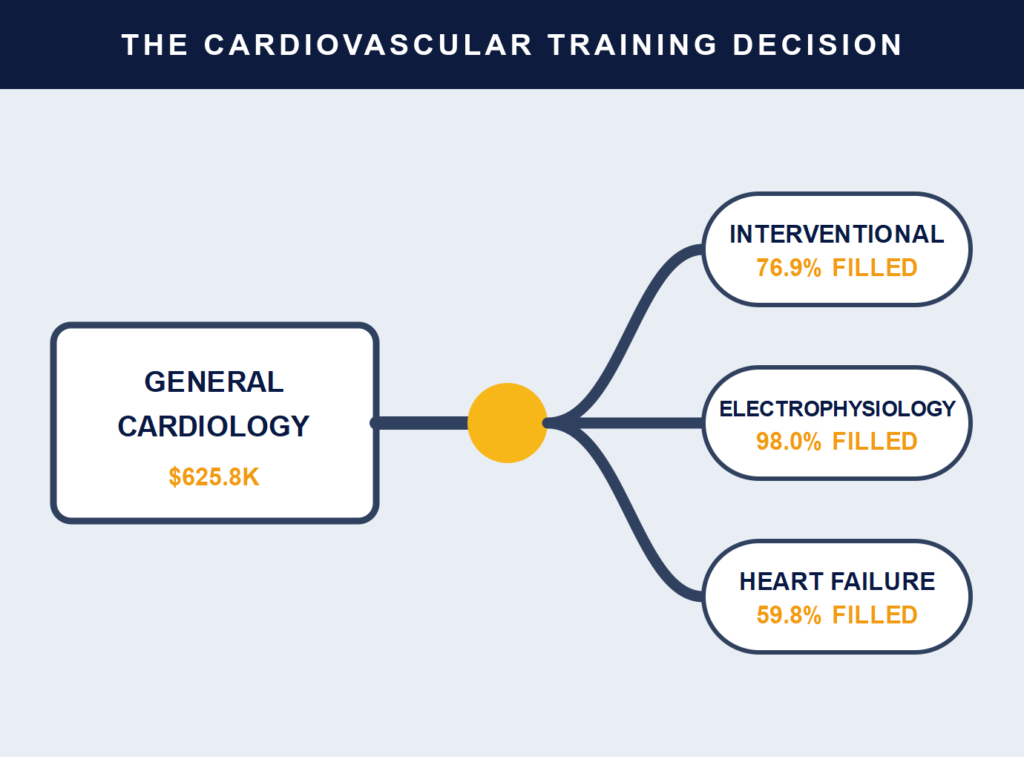
Every cardiovascular disease position filled in 2026. Interventional cardiology filled only 76.9% of its positions. Advanced heart failure filled just 59.8%.
The shortage is not at the entrance to cardiology. It emerges when fellows decide whether the next credential—and the career it creates—is worth pursuing.
CVD Fill Rate
1,347 of 1,347 positions
Interventional Fill Rate
71 positions unfilled
EP Fill Rate
147 of 150 positions
Advanced HF Fill Rate
51 positions unfilled
Cardiology Is Full. Some Advanced Pathways Are Not.
For the 2026 appointment year, 2,141 applicants competed for 1,347 cardiovascular disease positions. Every position filled.
After three years of general cardiology, demand divided sharply.
| Fellowship | Offered | Filled | Unfilled | Fill Rate |
|---|---|---|---|---|
| Cardiovascular Disease | 1,347 | 1,347 | 0 | 100.0% |
| Clinical Cardiac Electrophysiology | 150 | 147 | 3 | 98.0% |
| Interventional Cardiology | 307 | 236 | 71 | 76.9% |
| Advanced Heart Failure and Transplant Cardiology | 127 | 76 | 51 | 59.8% |
NRMP Specialties Matching Service, 2026 appointment year.
General Cardiology Is Already a Strong Endpoint
A cardiovascular disease fellow completes six years of postgraduate training and enters a broad, highly employable specialty. Without another fellowship, that physician can build a career in consultative cardiology, coronary disease, heart failure management, imaging, prevention, and inpatient or outpatient care.
General cardiologists also earn approximately $625,800 in average total compensation. Advanced fellowship must pull physicians away from an attractive career already available to them.
| Pathway | Average Compensation | Difference From General Cardiology |
|---|---|---|
| General Cardiology | $625,800 | — |
| Interventional Cardiology | $753,500 | +$127,700 |
| Clinical Cardiac Electrophysiology | $767,500 | +$141,700 |
| Advanced Heart Failure and Transplant Cardiology | $624,000 | −$1,800 |
Average total compensation reported by Marit Health, accessed July 2026. Actual compensation varies by geography, practice setting, experience, productivity and call.
Interventional Cardiology: A Premium With a Price
Interventional cardiology offered 307 positions to only 244 applicants. Nearly every applicant matched, but 71 positions remained open because the applicant pool was smaller than the available capacity.
The field offers approximately $128,000 more in average annual compensation than general cardiology. It also brings STEMI call, radiation exposure, musculoskeletal strain from wearing lead, high-stakes emergencies, and concerns about career longevity.
Called IC Fellowship Stressful
Warned About High Radiation Exposure
Reported Inadequate Psychological Support
Positions Left Unfilled in 2026
A separate national survey found that women were significantly more likely to be discouraged from interventional cardiology by radiation during childbearing, limited job flexibility, physical demands, lack of female role models, and the field’s culture.
Interventional cardiology still pays more. The question is whether the premium offsets the call burden, occupational risk, and physical demands of the career.
Advanced Heart Failure: More Training Without More Pay
Advanced heart failure attracted only 88 applicants for 127 positions. Unlike interventional cardiology, the field does not offer a consistent compensation premium over general cardiology.
The specialty asks physicians to complete another fellowship year while managing transplant evaluation, mechanical circulatory support, cardiogenic shock, and some of cardiology’s most complex patients.
A national study found that between 2020 and 2025, available positions increased 10% while applicants declined 24%. Unfilled positions rose from 30% to 52%.
National surveys consistently identify compensation, work schedule, geographic flexibility, practice-model variety, and recognition of non-RVU work as barriers to recruitment.
More training. More complex patients. More demanding call. No dependable increase in compensation.
Why Orthopedic Fellowship Is Different
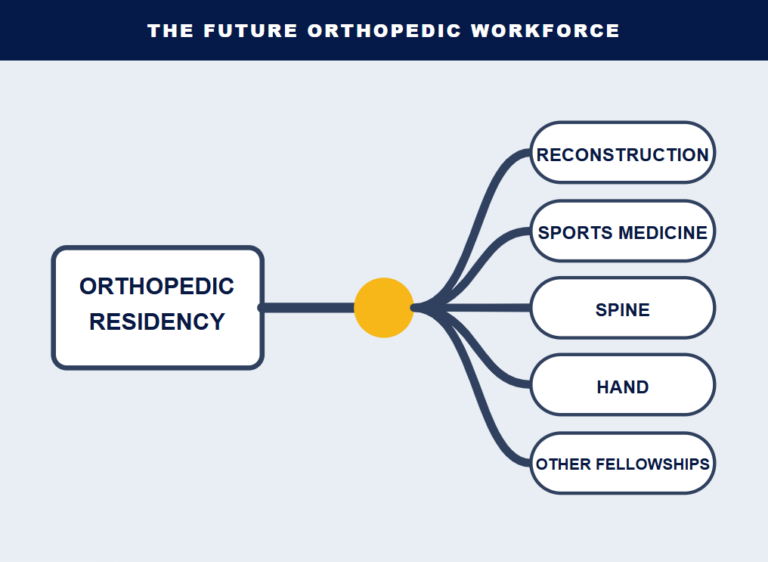
More than 90% of orthopedic residents pursue fellowship, even though not every orthopedic fellowship produces a financial return.
The difference is structural. Modern orthopedics is organized around sports medicine, adult reconstruction, spine, hand, foot and ankle, trauma, and other defined procedural specialties. Employers recruit by subspecialty. Referral networks direct patients to subspecialists. Fellowship often determines the operations a surgeon performs and the clinical market that surgeon enters.
Fellowship has become the expected gateway to specialized surgical practice. Residents pursue it for operative depth, marketability, mentorship, and access to subspecialty-defined jobs—even when the financial return is neutral.
General cardiology is already a complete, highly compensated specialty. Advanced fellowship must offer enough additional value to outweigh delayed earnings, narrower practice, added call, or occupational risk.
Electrophysiology Is the Counterexample
Electrophysiology requires two additional training years—longer than interventional cardiology or advanced heart failure—yet filled 147 of 150 positions.
It also reported the highest average compensation at approximately $767,500.
Training length alone is not driving the results. Fellows appear willing to invest more time when the resulting procedural identity, career opportunities, and financial return remain compelling.
ClearSight Analysis: Where the 2026 Graduating Class Went Next
ClearSight identified 1,191 cardiovascular disease fellows graduating in 2026 and linked the graduating class to its next stage of training.
2026 CVD Graduates
Entered Interventional Cardiology
Entered Electrophysiology
Entered Advanced Heart Failure
| Advanced Fellowship | 2026 CVD Graduates | Share of Graduating Class | Share of Filled Positions |
|---|---|---|---|
| Interventional Cardiology | 200 | 16.8% | 84.7% |
| Clinical Cardiac Electrophysiology | 133 | 11.2% | 90.5% |
| Advanced Heart Failure and Transplant Cardiology | 60 | 5.0% | 78.9% |
ClearSight Health analysis of 2026 cardiovascular disease graduates and their next training destination, Q3 2026.
Why Positions Are Going Unfilled
There is no single explanation.
Interventional cardiology has more training capacity than its current applicant pool can support. Its compensation premium competes against radiation, physical strain, demanding call, and concerns about career longevity.
Advanced heart failure faces a deeper recruitment problem: declining applicants, inconsistent exposure, limited geographic flexibility, and little compensation advantage over general cardiology.
Orthopedic fellowship became nearly universal because specialization became the expected endpoint. Advanced cardiology has not—because general cardiology remains too complete and too attractive a career for another fellowship year to sell itself.
Why This Matters
Advanced fellowship decisions determine where highly specialized cardiovascular expertise will emerge next—and where workforce gaps may deepen.
ClearSight connects training, program relationships, and career progression to show not only how many physicians enter cardiology, but which advanced pathways they choose and where they continue training.
- National Resident Matching Program. Results and Data: Specialties Matching Service, 2026 Appointment Year. NRMP.
- Marit Health. Cardiologist Salary and Subspecialty Compensation Data. Accessed July 2026. Marit Health.
- Society for Cardiovascular Angiography and Interventions. SCAI Responds to 2025 Interventional Cardiology Match Results. 2025. SCAI.
- Educational Experience of Interventional Cardiology Fellows in the United States and Canada. JACC: Cardiovascular Interventions. JACC.
- Sex Differences in the Pursuit of Interventional Cardiology as a Subspecialty Among Cardiovascular Fellows-in-Training. JACC: Cardiovascular Interventions. JACC.
- Increasing Rate of Unfilled Training Positions in the Advanced Heart Failure and Transplant Cardiology Match. Journal of Cardiac Failure. PubMed.
- Interest in Advanced Heart Failure and Transplant Cardiology Fellowship: A National Survey of Cardiology Fellows. JACC: Heart Failure. JACC.
- The Return on Investment of Orthopaedic Fellowship Training: A Ten-year Update. Journal of the American Academy of Orthopaedic Surgeons. PubMed.
- ClearSight Health Commercial Intelligence Platform. Analysis of 2026 cardiovascular disease graduates and advanced fellowship destinations, Q3 2026.